Electric vehicles are built with precision from start to finish. Every part that goes into them needs to match the design exactly, and that’s not always simple when you’re working with metal. Shapes can shift, measurements can be off, and when they are, problems show up fast.
We use progressive die metal stamping to build consistency into the process. This method works well for creating the same metal part again and again without losing shape or accuracy. When you’re dealing with EV designs that leave very little room for error, the way a part is made really matters. The fewer the differences, the smoother the build. At Banner Metals Group Inc., that consistency is backed by stamping presses ranging from 60 tons to 1200 tons, giving us flexibility to support a wide variety of EV components.
Progressive stamping isn’t flashy, but it delivers what EV builders need: steady results, precise measurements, and fewer surprises down the line.
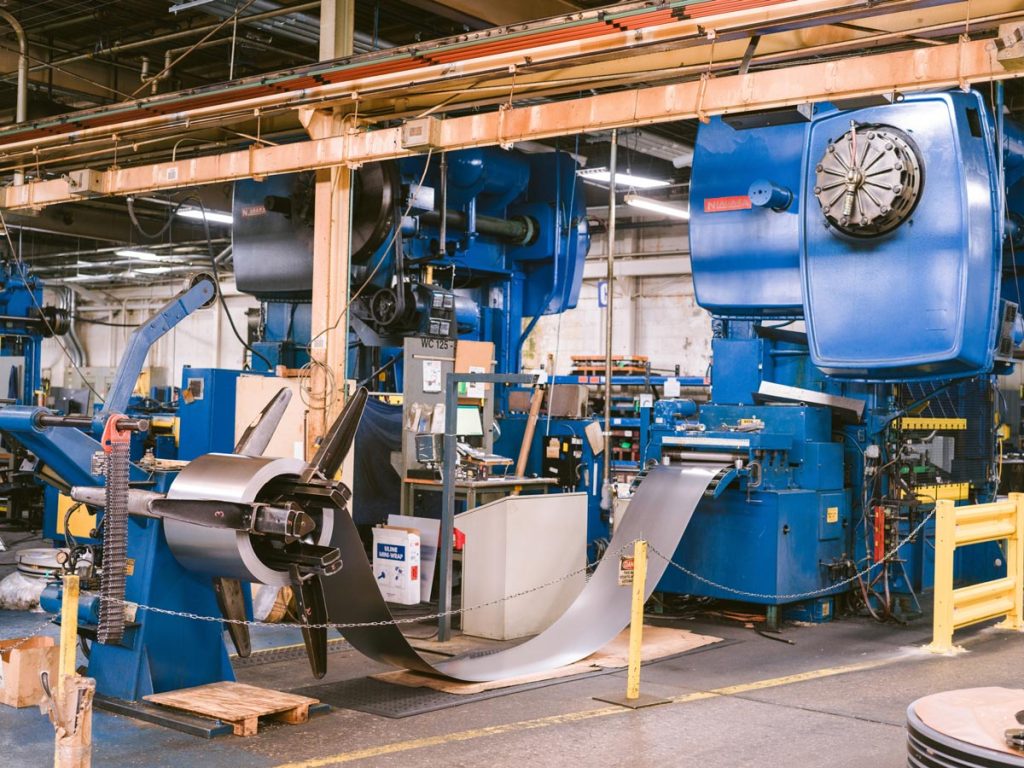
Stamped parts don’t come from a single punch or press. They go through several shaping steps, and progressive die stamping handles those steps within one setup. The metal coil feeds into a machine, which carries it through a series of die stations. At each one, it cuts, bends, or forms part of the final shape. By the end of the line, the finished part is stamped out and ready.
This setup takes less handling and keeps every part moving through the same path. It’s this consistent motion that helps prevent little shifts in shape or size between one piece and the next.
Since the dies are all part of one tool set, the actions stay aligned and in sync. That kind of structure keeps surprises to a minimum and lets the machine repeat the same steps thousands of times without needing frequent adjustments. That’s a major part of how we hold tight tolerances and meet the demands of electric vehicle manufacturers. Those tolerances apply across heavy gauge material up to .750 inches in bar and .625 inches in coil, as well as thinner stampings down to .018 inches, so both structural and lighter EV parts can run through the same dependable process.
In an electric vehicle, there’s not much room for a stamped frame to be slightly off. With battery trays, covers, and support brackets, everything has to fit, and it has to fit cleanly the first time.
The parts we make often serve as part of the structure or protective casing for sensitive components. If a single edge is out of alignment, it doesn’t just increase stress on one part. It throws off spacing, creates extra pressure on other components, and adds time during final assembly.
Here’s why consistency across stamped parts can make a real difference:
• It reduces chances of interference when pieces are joined together
• It keeps weight and performance balanced throughout the design
• It allows automation in final assembly to work without constant human fixes
The higher the consistency, the more likely every EV build stays on schedule and within specification.
Progressive dies are custom-built to perform specific actions in a very exact order. Once the setup is locked, each stroke repeats the same moves at the same positions. That kind of predictability doesn’t just improve speed, it gives us confidence in the repeat accuracy of every step.
We put a lot of care into the placement and timing of each station in the progressive line. That way, metal forms the same way each time it’s hit, bent, or cut. And when the process stays stable, we need fewer stoppages to fix problems or swap out tools.
This steadiness becomes even more helpful when production shifts into high gear. As demand grows, we need to know the first part and the ten-thousandth part will come out the same. Progressive stamping makes that kind of reliable scaling possible.
One of the quiet benefits of repeat consistency is how much gets saved behind the scenes. When parts get made right the first time, there’s less metal thrown out and fewer steps spent reworking pieces that didn’t shape up right.
In EV builds, every hour counts. Having to pause just to grind down an edge or fix a warped plate slows down the whole line and throws off delivery schedules.
Here are the ways steady stamping directly supports smoother operations:
• It lowers rejected parts from poor fit or deformities
• It limits costly rework during subassembly and final assembly
• It cuts back on leftover scrap from bad alignments or reshaped forms
Better results on the press side lead to simpler assembly, which means happier build teams and less stress when timelines get tight.
Making a part that looks right isn’t the same as making one that performs right. For EV work, it’s about more than lines on a CAD print. Stamped parts need to hold their shape when the vehicle is on the move.
Progressive stamping helps us hold tight ranges from one part to the next. That predictability adds strength to key areas and avoids thin spots or stress points that can wear out over time. When all the pieces match, the build works the way it was designed to.
EV programs also move quickly, and that speed requires steady parts that don’t need adjusting or special treatment. The more we can take guesswork and corrections out of the mix, the more we help keep assembly lines moving forward. Banner Metals Group Inc. has been involved in metal stamping work since its origins in 1921, and that experience supports the kind of reliability EV manufacturers expect from their stamped components.
Progressive die metal stamping makes it possible to keep every bracket, tray, or panel shaped the same way, time after time. That kind of reliability brings calm to a process that’s often moving fast.
By building consistency into the early stages of production, we help EV makers save time, cut waste, and avoid last-minute fixes. That doesn’t just improve each build, it makes scaling their production smoother too.
When parts arrive ready to fit with no surprises, the rest of the build takes care of itself. It’s a quiet kind of success, but it makes all the difference on the line.
At Banner Metals Group Inc., we focus on processes that create long-term value for EV manufacturers, especially when builds are under pressure to stay consistent and efficient. When part quality remains steady from the first batch to the last, everything from safety to production speed benefits. That is why we continue to invest in equipment and tooling designed specifically for progressive die metal stamping, a key strategy that keeps production lines running without unexpected slowdowns. For reliable results on your project, contact us to discuss your needs.